What is the tilcayo cat? Leopardus tilcayo, explained
The tilcayo cat (Leopardus tilcayo) is a newly recognized species of small wild cat from the Andean foothills of Bolivia. Formally described in the journal Current Biology in September 2026, it is the first living cat species new to science to be named in more than 100 years — a reminder that even the most familiar animal family on Earth still holds surprises.
The name comes straight from the people who have shared the forest with it for generations:
“We chose to name the species ‘Tilcayo’ — the name local communities use to describe the cat. It's our way of honouring their ancestral knowledge and connection to this animal.”
— Paola Nogales Ascarrunz, lead researcher and National Geographic Explorer
Quick species card
| Scientific name | Leopardus tilcayo |
|---|---|
| Common name | Tilcayo cat / Tilcayo tiger cat |
| First described | September 2026, in Current Biology |
| Native to | Bolivia’s Yungas cloud forest |
| Head–body length | ≈ 45–46 cm (18 in) |
| Weight | ≈ 1.3–1.4 kg (≈ 3 lb) |
| Coat | Pale brown with irregular dark rosettes |
| Activity | Likely nocturnal (camera-trap evidence) |
| Known living individuals | Two confirmed; one in protective captivity |
| Lineage split | ≈ 1.4 million years ago from other tiger cats |
Scientific classification
Leopardus tilcayo sits inside Leopardus, the genus of small Neotropical cats that includes the ocelot, margay, oncilla and Geoffroy's cat. Within that genus it belongs to the tiger cat complex — spotted, long-tailed cats roughly the size of a small house cat. Until this study the group was treated as one species (Leopardus tigrinus, the little spotted cat); genetic work on 38 individuals from across South America showed it is actually five distinct species:
- Leopardus tilcayo — the tilcayo cat (Bolivia's Yungas) — newly described
- Leopardus tigrinus — the northern tiger cat / oncilla
- Leopardus guttulus — the southern tiger cat
- Leopardus emiliae — the eastern tiger cat
- Leopardus pardinoides — the clouded tiger cat
A new Peruvian subspecies, L. tigrinus antisuyo, was described in the same paper. Genetic dating suggests the tilcayo lineage separated from its relatives about 1.4 million years ago, evolving in isolation in the Yungas.
What does the tilcayo cat look like?
Picture a tiny, elegant spotted cat with a muted, pale-brown coat covered in large, irregular rosettes — bigger and more open than the fine solid spots of the oncilla. Reporting on the species highlights its rounded, almost teddy-bear ears and a tail that is larger and more slender than those of its closest relatives. It is genuinely small: about 45–46 cm from nose to the base of the tail and around 1.3–1.4 kg — lighter than most adult house cats. See our full appearance and size guide with side-by-side pattern comparisons.
Where does it live?
The species is native to the Yungas cloud forest of Bolivia — the humid, mist-drenched mountain forests on the eastern slope of the Andes, within the Andes–Amazon basin, one of the most biodiverse and least-studied regions of the Neotropics. The true extent of its range is unknown, because tiger cats are easily misidentified as oncillas or margays in camera-trap surveys. Details in habitat & range.
How does it live?
Almost everything about its ecology is still unknown — the species was described from just a handful of known individuals. Evidence so far: small rodent remains in scat samples (diet) and camera-trap patterns suggesting nocturnal activity. Fieldwork led by Ascarrunz is underway to document the species in the wild. More in diet & behavior.
The known individuals
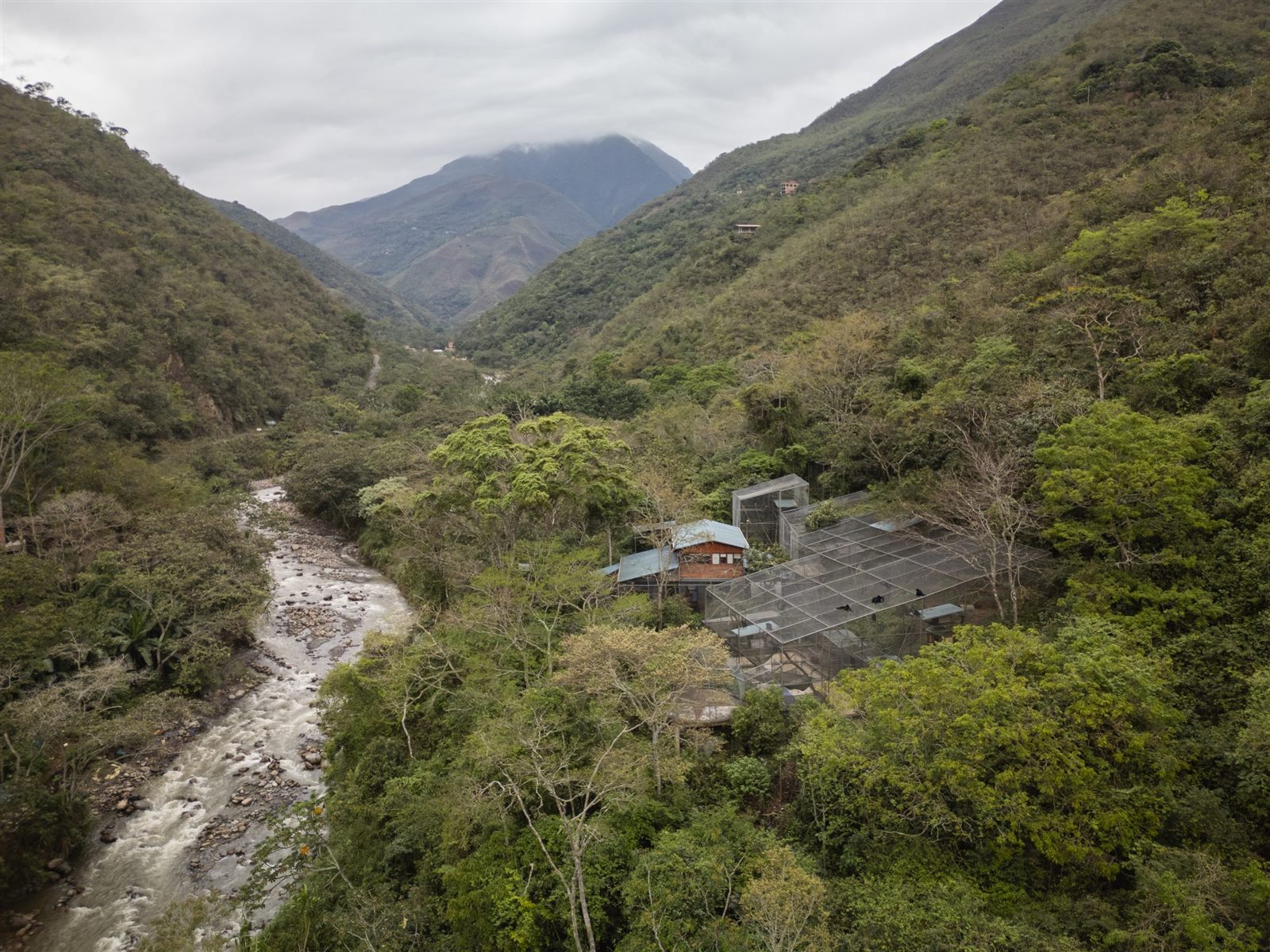
Two living tilcayo cats have been confirmed so far. The best known is a ten-year-old male at the Senda Verde Wildlife Sanctuary on the Yolosa River in the Yungas. He arrived around 2017, surrendered by a local family that had kept him in their home — a chance encounter that ultimately led to the species' discovery. His DNA, together with museum specimens, cracked the case.
Is it endangered?
Not yet formally assessed as a separate species. The IUCN Red List currently evaluates the old "tiger cat" as two Vulnerable species with declining populations; the research team has submitted their results so all five lineages — including the tilcayo — can be assessed individually at the next evaluation. Given that only two living individuals are confirmed and its forest home is under pressure from deforestation, agriculture, fire and mining, researchers are treating the species as a priority. Full analysis in conservation status.
Why the discovery matters
Describing a new cat species after a century-long gap “shows how much we still have to learn about the biodiversity around us,” says Ascarrunz — and reminds us that the Yungas forests shelter species science is only beginning to understand. For the small-cat research community, the paper is also a taxonomic earthquake: five species where there was one changes every range map, every population estimate and every conservation plan for tiger cats in South America.